
What You Need to Know About the FDA Abortion Pill Case in Federal Court
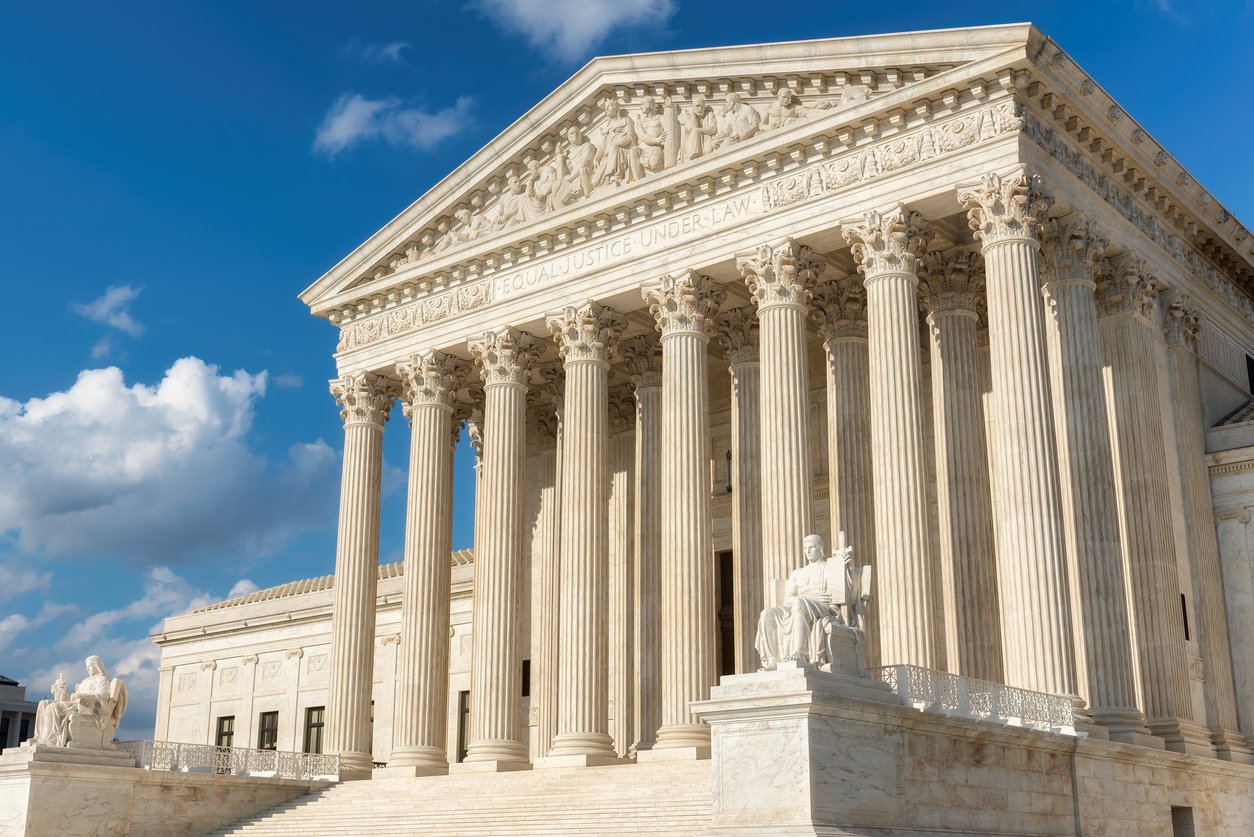
The Fifth Circuit Court of Appeals issued a ruling on Friday that temporarily blocked the mailing of mifepristone, one of the substances commonly used in chemical abortion pill regimens. The Supreme Court issued a stay on Monday, with Justice Samuel Alito, who oversees emergency appeals arising from the Fifth Circuit, placing the ruling on hold for at least one week.
Biden officials had amended FDA rules in 2021 requiring women to visit a doctor before receiving mifepristone, arguably encouraging the telehealth abortions which now account for one in four abortions nationwide, especially in conservative states with so-called abortion bans.
The short-lived ruling was celebrated as a major victory by Pro-Life establishment voices. Kristan Hawkins, the president of Students for Life, argued that the Fifth Circuit ruling “halts all chemical mail-order abortions,” insisting that “this actually makes” conservative states “abortion-free.” Fred Deutsch, a delegate of National Right to Life and board member of South Dakota Right to Life, claimed that “abortion will all but disappear in South Dakota” if the ruling stands, asserting that the ruling was superior to legislation that would abolish abortion.
But even if the FDA rule is ultimately reversed and mifepristone is no longer allowed to be sent through the mail, there should be no expectation of a meaningful decline in abortions. The only way to achieve such an objective involves passing equal protection legislation that criminalizes abortion as murder for both providers and perpetrators who harm preborn babies.
There are many other ways to self-induce abortions beyond mifepristone.
The typical abortion pill regimen consists of both mifepristone, which blocks the pregnancy hormone progesterone to break down the uterine lining and cause the death of the preborn baby, and misoprostol, which forces contractions and induces the delivery of the baby.
While many abortion pill providers send women both mifepristone and misoprostol, abortions using only misoprostol are very common elsewhere in the world. Latin American women have been procuring abortions with only misoprostol for decades, and women in some European countries with more restrictive abortion laws, such as Poland, likewise use misoprostol alone.
Planned Parenthood already promotes abortions using only misoprostol as a “safe, effective, and legal” option for women to choose, and with news of the Fifth Circuit ruling in recent days, media outlets immediately discussed misoprostol as a standalone abortion drug. There are also increasingly popular herbal tinctures that rely on neither mifepristone nor misoprostol.
Any effort targeting mifepristone alone is ultimately ineffective, because mifepristone is not required for a successful chemical abortion. Pro-Life establishment groups targeting only mifepristone are not providing any meaningful barrier to obtaining a self-induced abortion.
That is why anti-abortion legislative efforts should center on criminalizing abortion as murder for everyone willfully involved, rather than regulating the time, place, and manner of abortion. When specific abortion methods are regulated, Planned Parenthood and other abortion providers are merely encouraged to pivot tactics, as they are currently accomplishing amid this legal battle.
There are overseas abortion pill supply chains unaffected by federal law.
The vast majority of abortion drugs are manufactured overseas, such that completely stopping the substances from entering the United States would be impossible, particularly while the Trump administration refuses to enforce the Comstock Act against mailing abortion pills.
Danco and GenBioPro, the two major American pharmaceutical companies that produce mifepristone, have reportedly sourced the substance from European countries and India. The manufacturing landscape for misoprostol is highly decentralized since the drug is primarily used for ulcers and other purposes unrelated to abortion. There are established supply chains for misoprostol in many nations, including India, Mexico, China, Russia, Egypt, and France.
But if the FDA were to reverse the Biden administration rule allowing for mifepristone to be mailed, and were to also impose new restrictions on misoprostol, the federal government could not penalize foreign abortion manufacturers and providers outside of their jurisdiction.
Trump administration officials are meanwhile refusing to enforce the Comstock Act, which forbids the mailing of obscene materials such as substances used for self-induced abortions, despite numerous appeals from anti-abortion organizations. There is no expectation that a ban on mailing mifepristone, or any other substance used for abortion, would actually be enforced under those laws. There are already some providers invoking state shield laws to continue mailing mifepristone, as well as others pivoting to misoprostol alone, as previously noted.
The only way forward is equal protection of the laws for preborn babies.
Instead of only considering enforcements against abortion pill providers, anti-abortion efforts should allow for prosecutions against those who procure the substances with intent to murder babies, yet laws passed by Pro-Life groups provide immunity to women who have abortions.
This allows for women to continue ordering abortion pills, from both international sources and providers in shield law states, leaving their preborn babies vulnerable to legalized slaughter.
In order to truly criminalize abortion as murder and effectively deter abortions, lawmakers must establish equal protection of the laws for preborn babies. Anyone who willfully provides abortions or perpetrates an abortion should be subject to criminal penalties for murder.